
Fall color near Brevard peaks between mid and late October at most elevations, but the season runs about six weeks end to end. Transylvania County spans 4,000 feet of elevation, and color arrives at the top long before it reaches the valley. Here's where the color will be when you arrive.
Fall color near Brevard, North Carolina peaks between mid and late October at most elevations, but the season runs much longer than a single week. Transylvania County spans roughly 4,000 feet from the valley floor in town to the highest peaks along the Blue Ridge Parkway, and color arrives at the top long before it reaches the bottom. Counting from the first turn on Black Balsam Knob in late September to the last of it on the streets of downtown Brevard in early November, the season stretches across about six weeks.
That spread is the useful thing to understand before you book. Most fall color guides give one peak week for the North Carolina mountains, which serves you well only if you happen to be standing at the right elevation. This guide breaks the season down location by location, so you can match your trip to where the color will be when you arrive.
A Local's Guide to Brevard
Color moves down a mountain, high ground first and valleys last
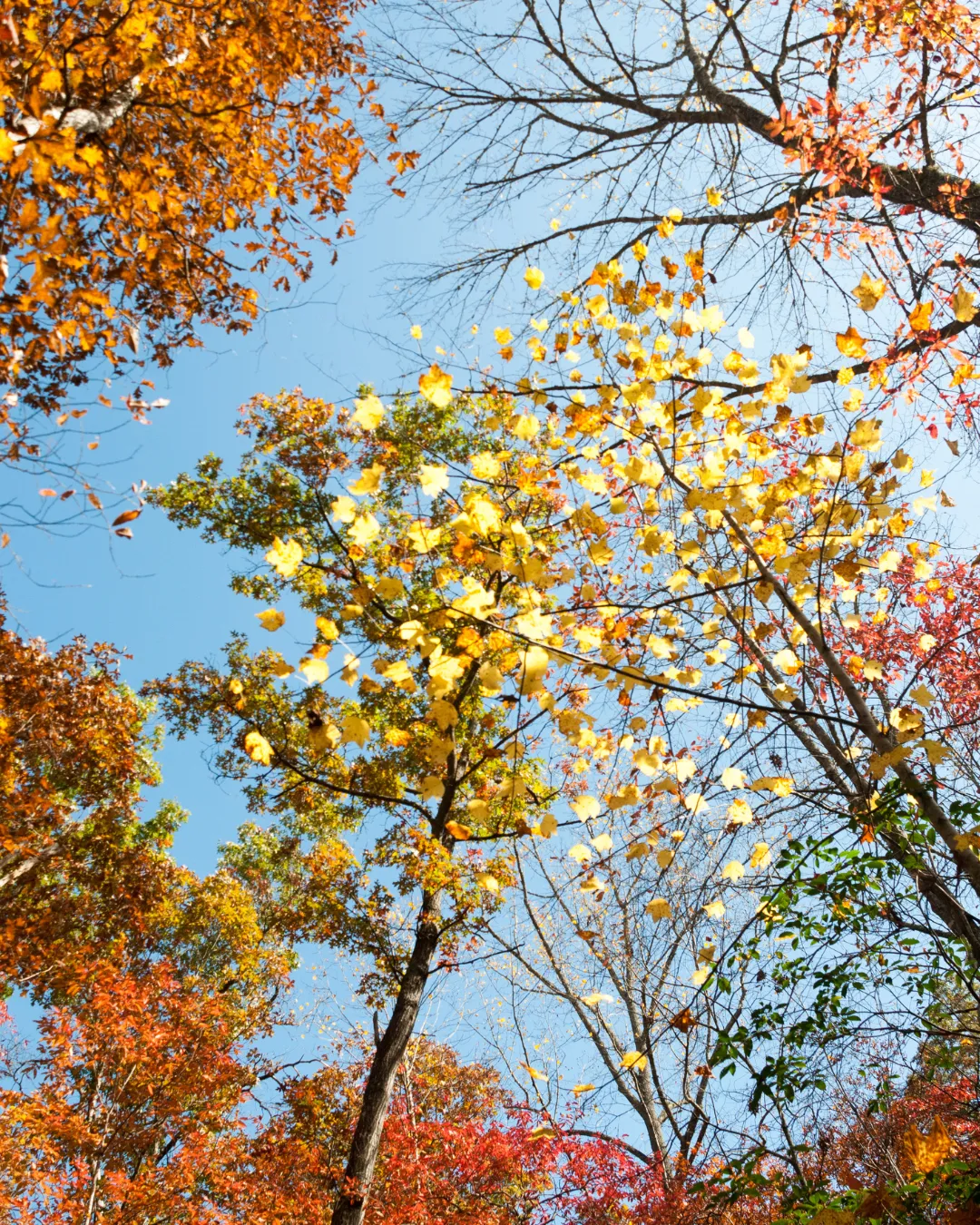
Fall color moves down a mountain. It begins at the highest elevations and works toward the valleys over several weeks, which is why a single town can have three different right answers to the question of when to visit. The rule used by Appalachian State University's biology department, which maintains the most widely cited fall color map in North Carolina, is that peak color arrives roughly one week earlier for every 1,000 feet of elevation gain. Black Balsam Knob at 6,200 feet and downtown Brevard at 2,200 feet are 4,000 feet apart, which puts them about four weeks apart.
This is the part most visitors miss. The season across Transylvania County runs about six weeks end to end, but any single overlook, trail, or stretch of road holds its best color for roughly seven days. Arriving during the county's season is easy. Arriving during a particular place's peak takes a little planning.
Cool nights and bright sunny days produce the most vivid reds. A dry summer, an early hard freeze, or a run of heavy storms can mute the color or shorten the season. None of that changes the sequence, which is high ground first and valleys last, every year.
Many fall color timelines circulating for the North Carolina mountains are calibrated to the High Country around Boone, Blowing Rock, and Grandfather Mountain. That region is roughly two and a half degrees of latitude north of Brevard, and App State's own methodology treats each degree of latitude as equivalent to about 656 feet of elevation. The same elevation near Brevard peaks later than it does up there. Planning a Transylvania County trip on High Country numbers means arriving early.
High to Low
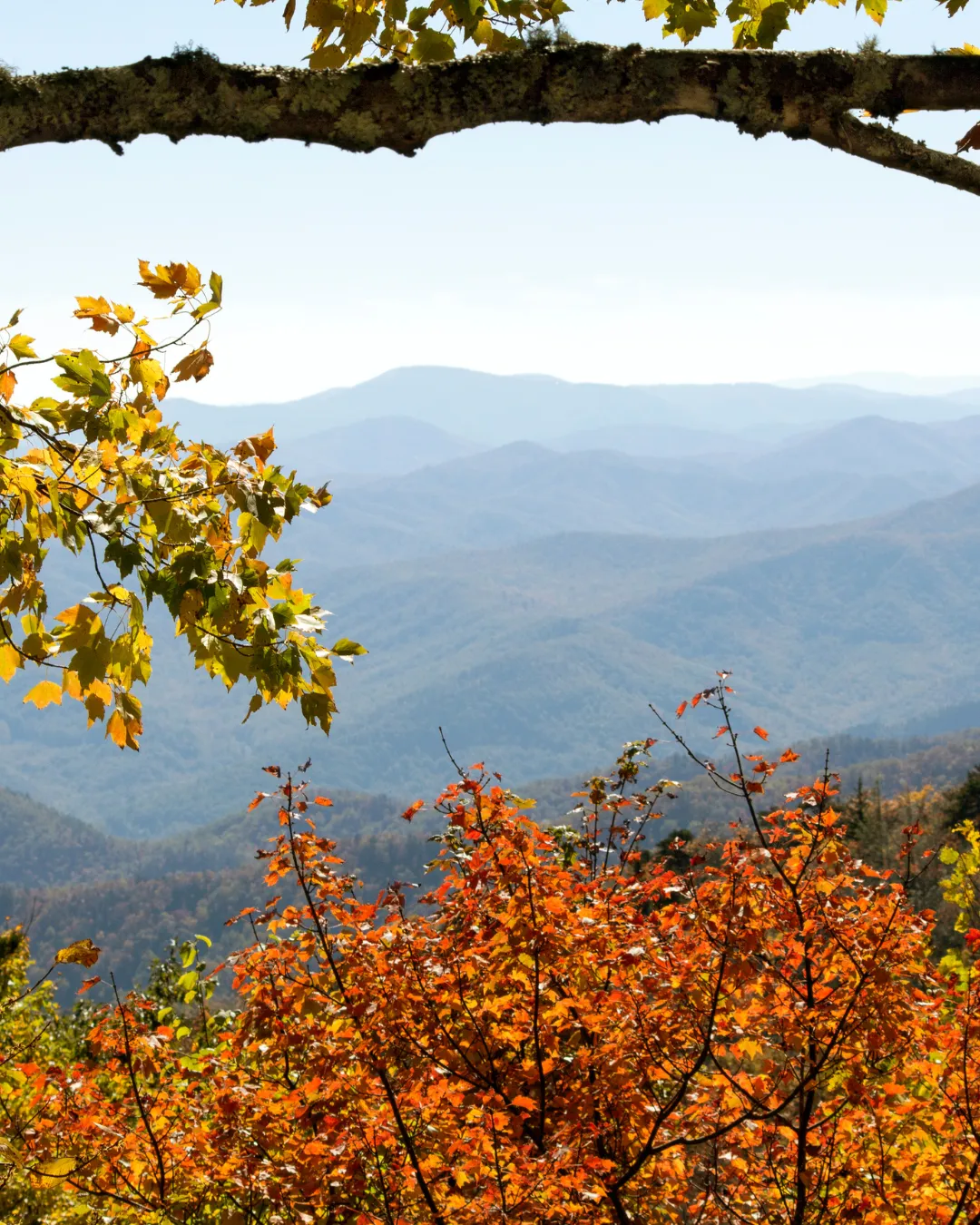
The table below gives typical peak windows for named locations around Brevard, ordered from the highest elevation to the lowest. Match your dates to the elevation you want to be standing at, not to a single "peak week" for the region.
| Location | Elevation | Typical Peak Window |
|---|---|---|
| Black Balsam Knob | 6,200 ft | Late September into early October |
| Devil's Courthouse | 5,720 ft | First week of October |
| Mount Pisgah | 5,700 ft | First week of October |
| Beech Gap (NC-215) | 5,334 ft | First week of October |
| Graveyard Fields | 5,000 ft | Late September to early October |
| Wagon Road Gap (US-276) | 4,550 ft | Second week of October |
| Looking Glass Rock summit | 3,700 ft | Mid-October |
| John Rock | 3,300 ft | Mid to late October |
| DuPont State Forest | 2,756 ft avg | Late October |
| Sliding Rock | 2,700 ft | Late October |
| Moore Cove Falls | 2,620 ft | Late October |
| Looking Glass Falls | 2,350 ft | Late October into early November |
| Downtown Brevard | 2,200 ft | Late October into early November |
At 5,000 feet the pattern would place it around the second week of October, but the shrub and heath vegetation covering the valley there changes ahead of hardwood forest. In practice it colors closer to Devil's Courthouse, which stands 700 feet above it. It is one of the first places in the area to turn and one of the reasons the Parkway gets busy in late September.
The land ranges from 1,591 feet at its lowest to 3,698 feet at its highest, a difference of more than 2,000 feet and therefore about two weeks of color timing. The Little River waterfall corridor, meaning High Falls, Triple Falls, and Hooker Falls, lies in the lower part of the forest and turns late. The higher ground toward Corn Mill Shoals and Cedar Rock turns earlier. Mid-October favors the slickrock; the end of the month favors the falls.
Elevation sets the order every year, but a dry summer, an early freeze, or a warm autumn can shift the whole calendar by a week in either direction. For the current season, Explore Brevard maintains an interactive fall color map with historical trends and real-time reports, and Appalachian State's biology department publishes weekly color reports through the autumn. Check either before you finalize a date.
The Calendar
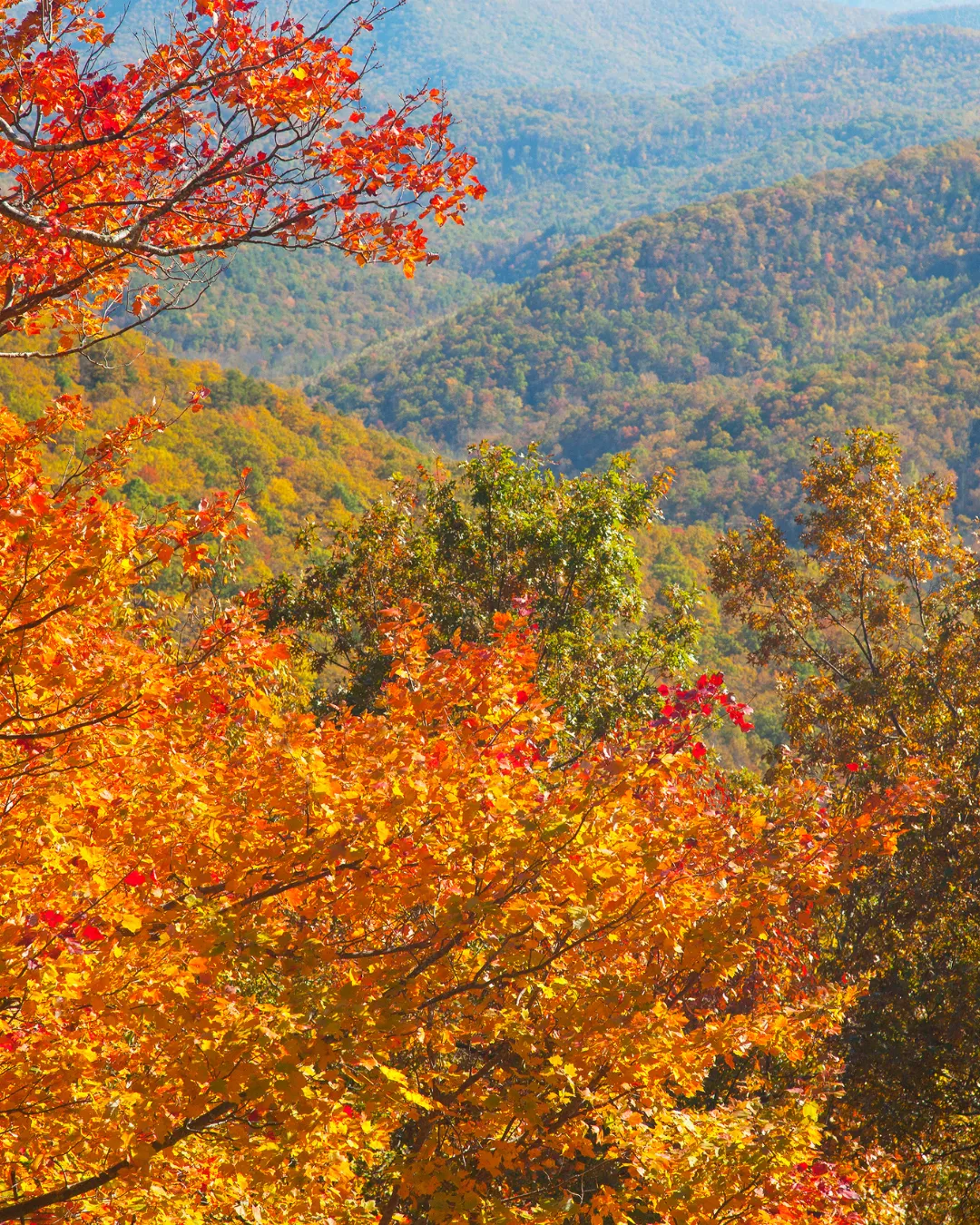
Six weeks, six elevations. Read down the list to find the week you're coming, and it points you to the ground that will be at peak while you're here.
Start high. This is the quietest week of the season, since most visitors are still planning around October.
The high Parkway peaks together, at Devil's Courthouse, Mount Pisgah, and Beech Gap.
Color reaches the Parkway's lower anchor.
Color reaches the elevations most people are hiking.
The waterfall weeks. The photograph most people come here for happens now, not at the start of the month.
Downtown Brevard finishes the season.
By Car
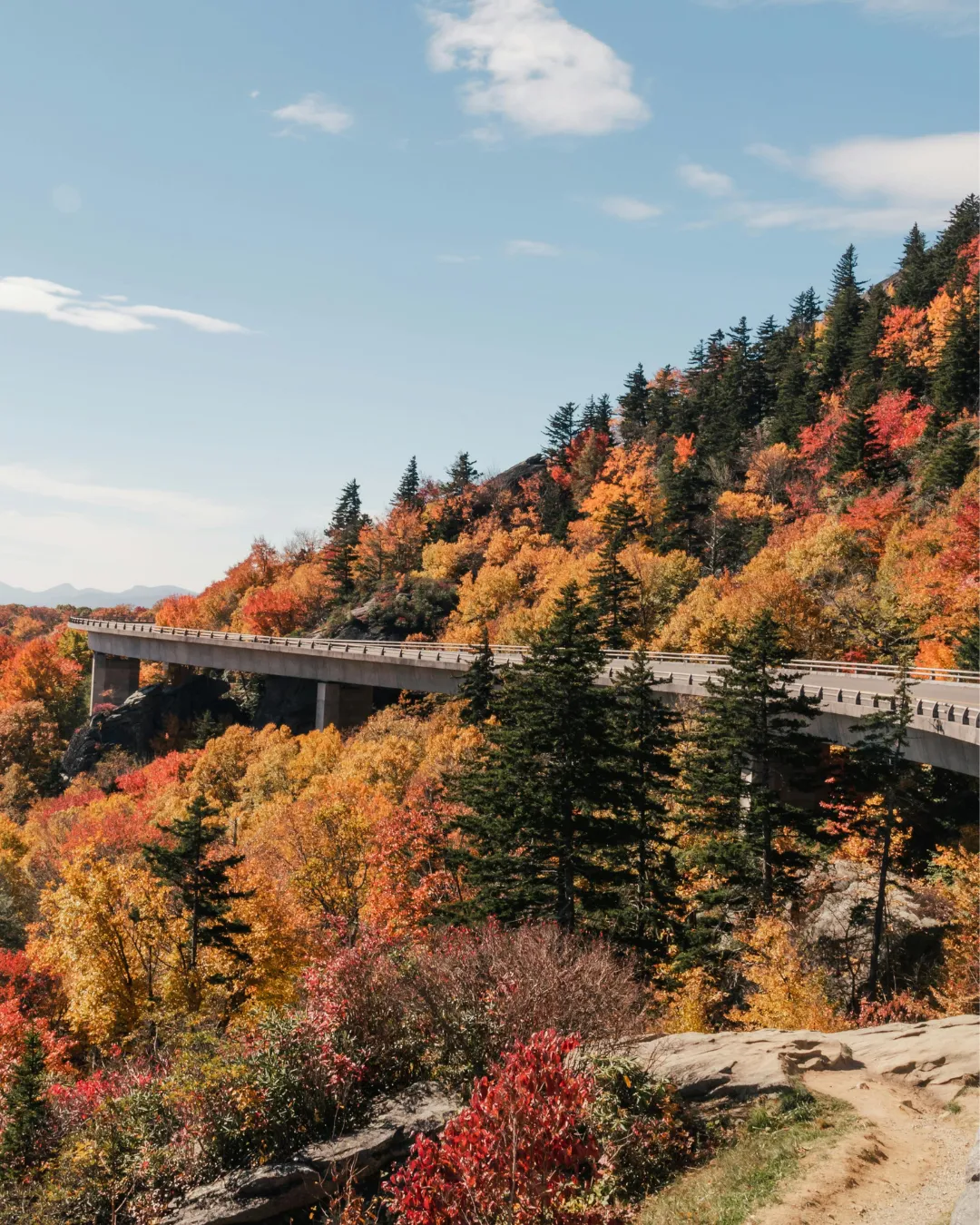
Because color is tied to elevation, the best fall drives near Brevard are the ones that climb. A single loop can pass through several weeks of the season at once.
A loop of roughly 79 miles that runs north from Brevard on US-276, joins the Blue Ridge Parkway, and returns south on NC-215. It is the single best fall drive in the area, and the reason is elevation. The loop leaves Brevard at 2,200 feet, climbs US-276 past Looking Glass Falls and Sliding Rock to Wagon Road Gap at 4,550 feet, follows the Parkway past Graveyard Fields and Devil's Courthouse at 5,720 feet, then descends NC-215 through Beech Gap at 5,334 feet and back down to the valley. That is a climb of more than 3,500 feet and a return to where you started.
Which means the loop drives through the entire color season in a single afternoon. In any given week between late September and early November, some stretch of this road is at peak. Early in the season the high middle section carries the color and the two ends are green. Late in the season the reverse is true. There is no wrong week to drive it, only a different part of it that will be best. Either direction works, though going up US-276 first puts the waterfalls at the start of the drive, when the light is better for photographs.
If you have less time, the Parkway stretch on its own is the concentrated version. Roughly eleven miles separate the US-276 and NC-215 crossings, and that section holds Graveyard Fields, Devil's Courthouse, and a run of overlooks above 5,000 feet. It peaks in the first two weeks of October.
US-64 heads west out of Brevard toward Rosman, Lake Toxaway, and Cashiers, passing the turnoff for Gorges State Park. It climbs from 2,200 feet in Brevard to about 3,500 feet in Cashiers, a smaller version of the Parkway gradient. The Cashiers end peaks around mid-October, close to Looking Glass Rock and John Rock; the Brevard end holds color for another two weeks after that. Drive it in the second half of October, when the high country is finished and this stretch is at its best.
There are no fuel stations, restaurants, or shops on the Blue Ridge Parkway itself, so fill up in Brevard before you leave. Parkway traffic on October weekends is slow and the overlook pullouts fill; weekday mornings are a different experience entirely. High-elevation sections close during ice, snow, and heavy fog, and closures happen more often above 5,000 feet than below. The National Park Service maintains a real-time road closure map for the Parkway, which is the place to check before driving up.
On Foot
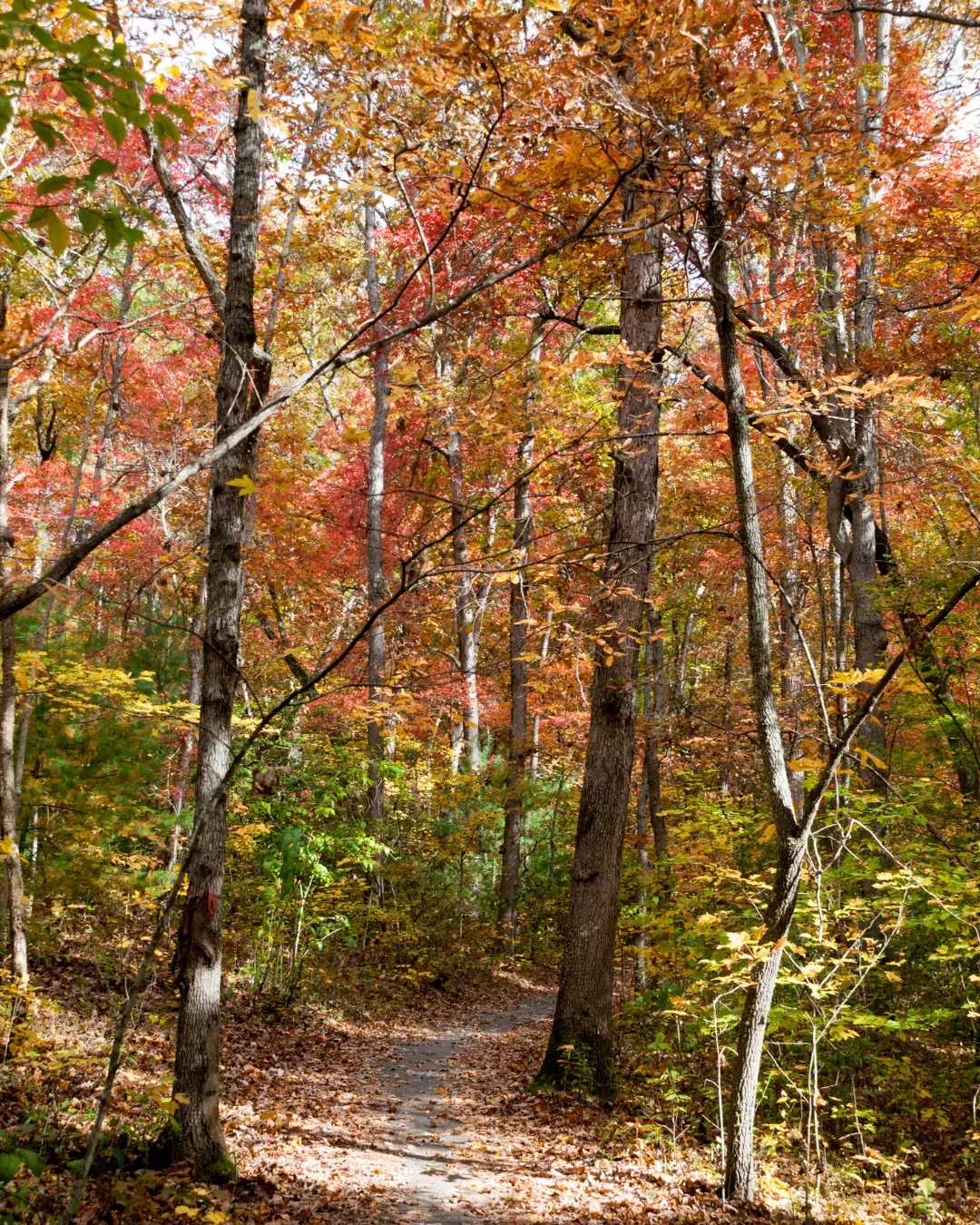
The right hike in October depends on the elevation you want to be standing at. These are ordered by when they peak, from the high balds in late September to the waterfall corridor in early November.
Late September into early October. The grassy balds above 6,000 feet are open country, rare in the southern Appalachians, and the best place in the region for long views over color rather than into it. Access is from Forest Road 816 off the Parkway, and the walking is short for the reward. The first place in the area to turn.
First week of October. A short, steep paved climb from the Parkway to a rock outcrop with a view across several states on a clear day. The least effort for the most view of anything in this list, which makes it the right choice for a group with mixed abilities or limited time.
Late September to early October. A 3.5-mile loop through an open valley with two waterfalls and a boardwalk trail network in places. The shrub and heath cover turns ahead of hardwood forest, so it peaks with the higher summits rather than its own elevation. One of the most photographed places on this stretch of the Parkway, and the lot fills accordingly.
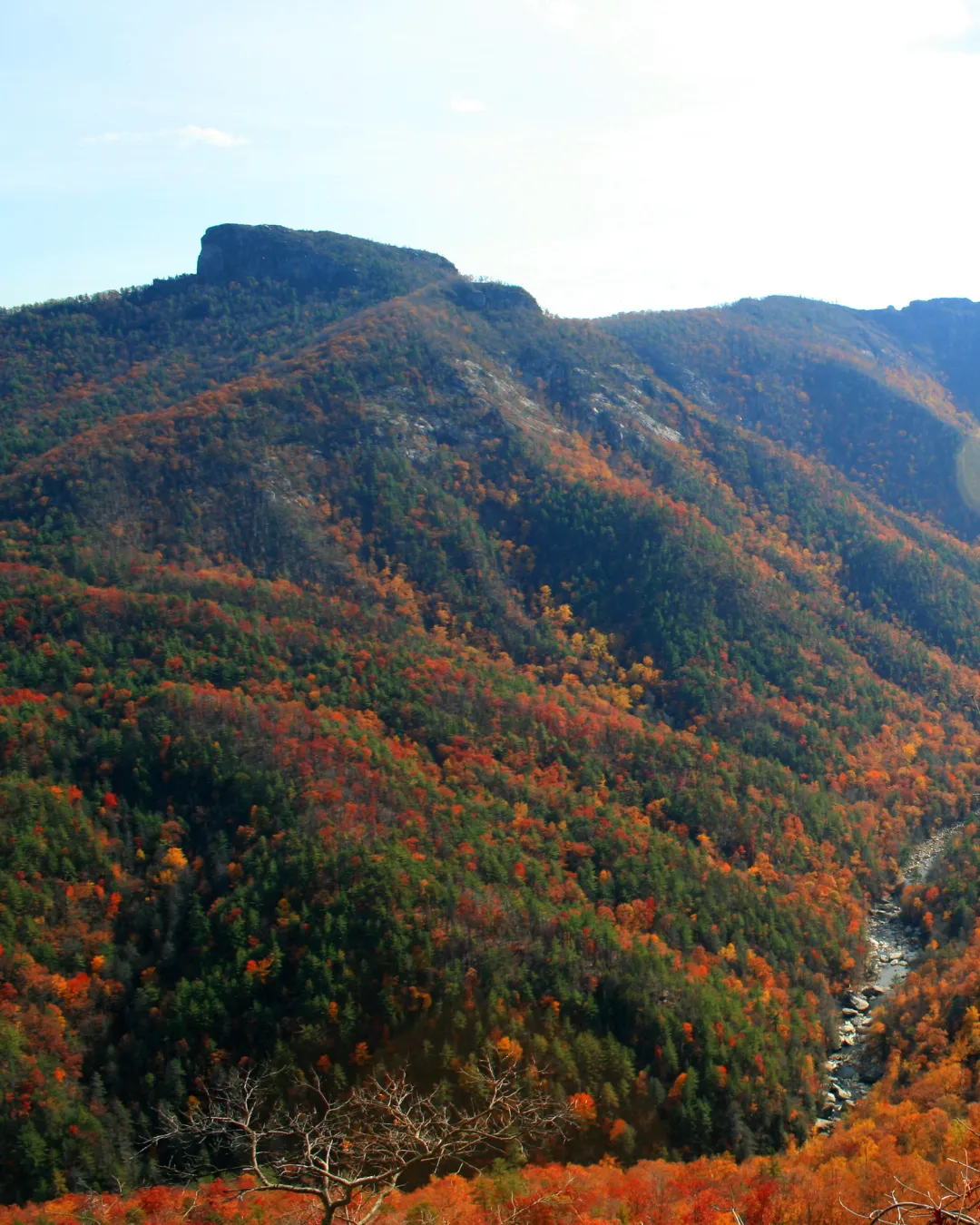
Mid-October. Six miles round trip with 1,699 feet of climbing and no views until the summit. In October that tradeoff pays better than any other time of year, because the canopy you walk under is the color you came for and the view at the top opens across a forest in full turn. Allow three and a half to four hours.
Mid to late October. A loop of roughly five miles from the Pisgah Center for Wildlife Education, ending on a granite face that looks straight across at Looking Glass Rock. Quieter than Looking Glass, and it gives you the view of it rather than the view from it.
Mid-October. The Cedar Rock and Corn Mill Shoals side of DuPont turns before the rest of the forest. Open granite slickrock with color on every side is a combination you will not find in many places.
Late October into early November. High Falls, Triple Falls, and Hooker Falls all lie within 200 feet of each other on the Little River, so they turn within a day or two. The High Falls Loop covers the first two in 3.2 miles. Hooker Falls at 2,220 feet is one of the last places in the area to reach color, a reliable choice when the mountains have gone bare.
Late October. A 1.3-mile round trip to a 50-foot waterfall you can walk behind, with the color arriving late in the season along with the rest of the US-276 corridor.
Trail and road conditions in Pisgah and DuPont change seasonally and after storms. For full trail write-ups, see our guide to hiking in Pisgah National Forest and the wider things to do in Brevard.
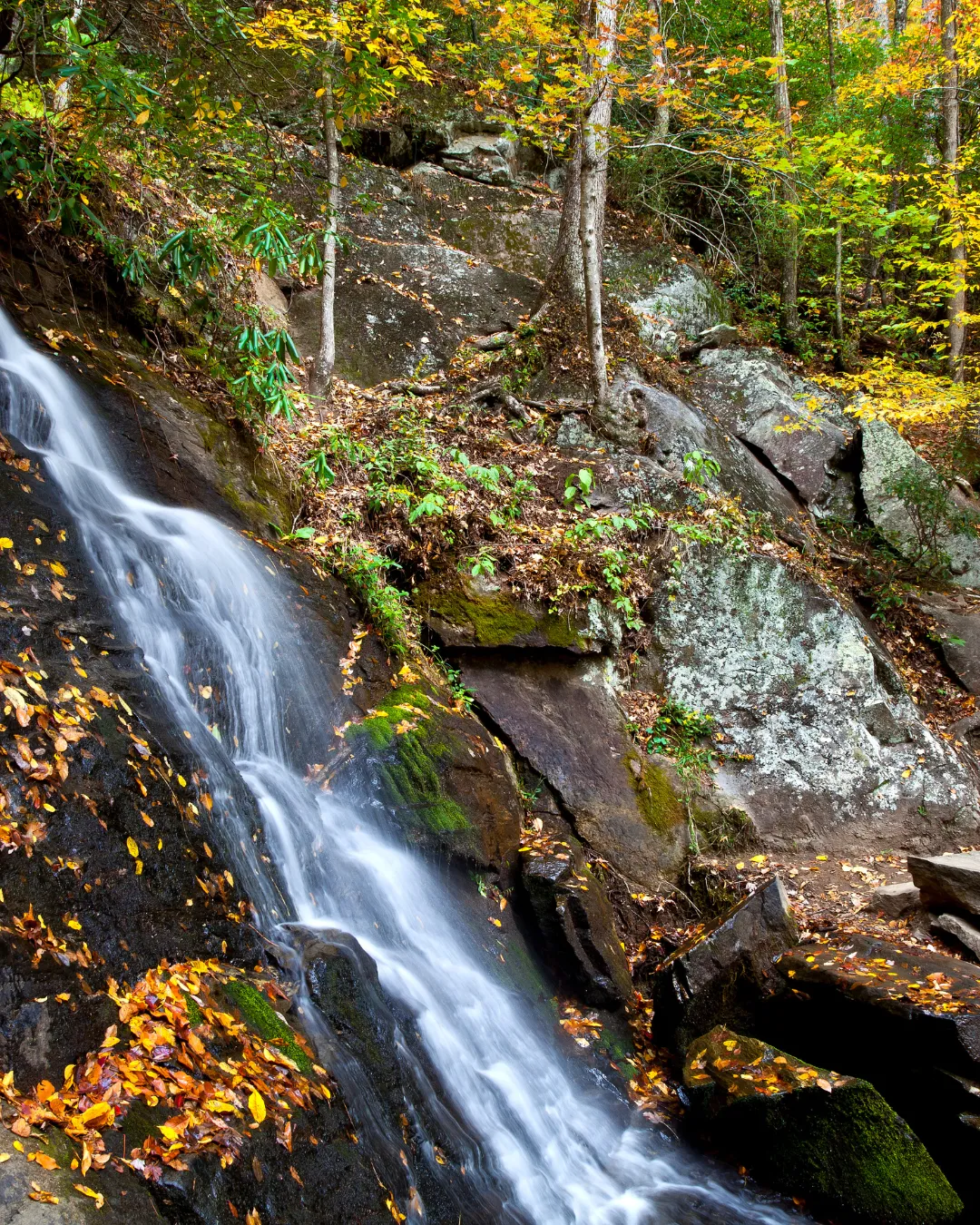
Where to Stay
Where you stay in October decides which part of the season you wake up in. That matters more here than in most places, because Transylvania County holds 4,000 feet of elevation and the color moves down through it over six weeks.
In Town · 2,200 ft
Downtown Brevard sits at the bottom of the gradient, so the trees outside your window turn last. Late October into early November is when the town looks best, and you're within walking distance of dinner. The tradeoff: you're 45 minutes from the Parkway, where the color is for the first half of the season.
Mid Elevation · 2,500–3,500 ft
Anywhere in this band puts you in the middle of the season rather than at either end, with a shorter drive up to early color and a shorter drive down to late color.
Valley Bear Farms · 3,100 ft
Right in the middle of the color gradient. The season lasts about a month from one base: Black Balsam turns in late September 30 minutes away, and downtown holds color into November 35 minutes down.
The Property's Own Peak
Valley Bear Farms itself peaks in mid to late October, about the same time as the Looking Glass Rock summit. Six miles of private trails means you can walk in the color without driving anywhere.
Book Fall Dates Early
October is the busiest month of the year in the North Carolina mountains, and Valley Bear Farms books out fast for foliage season. If peak color is your target, lock in your dates well ahead.
Check Fall Availability at Valley Bear Farms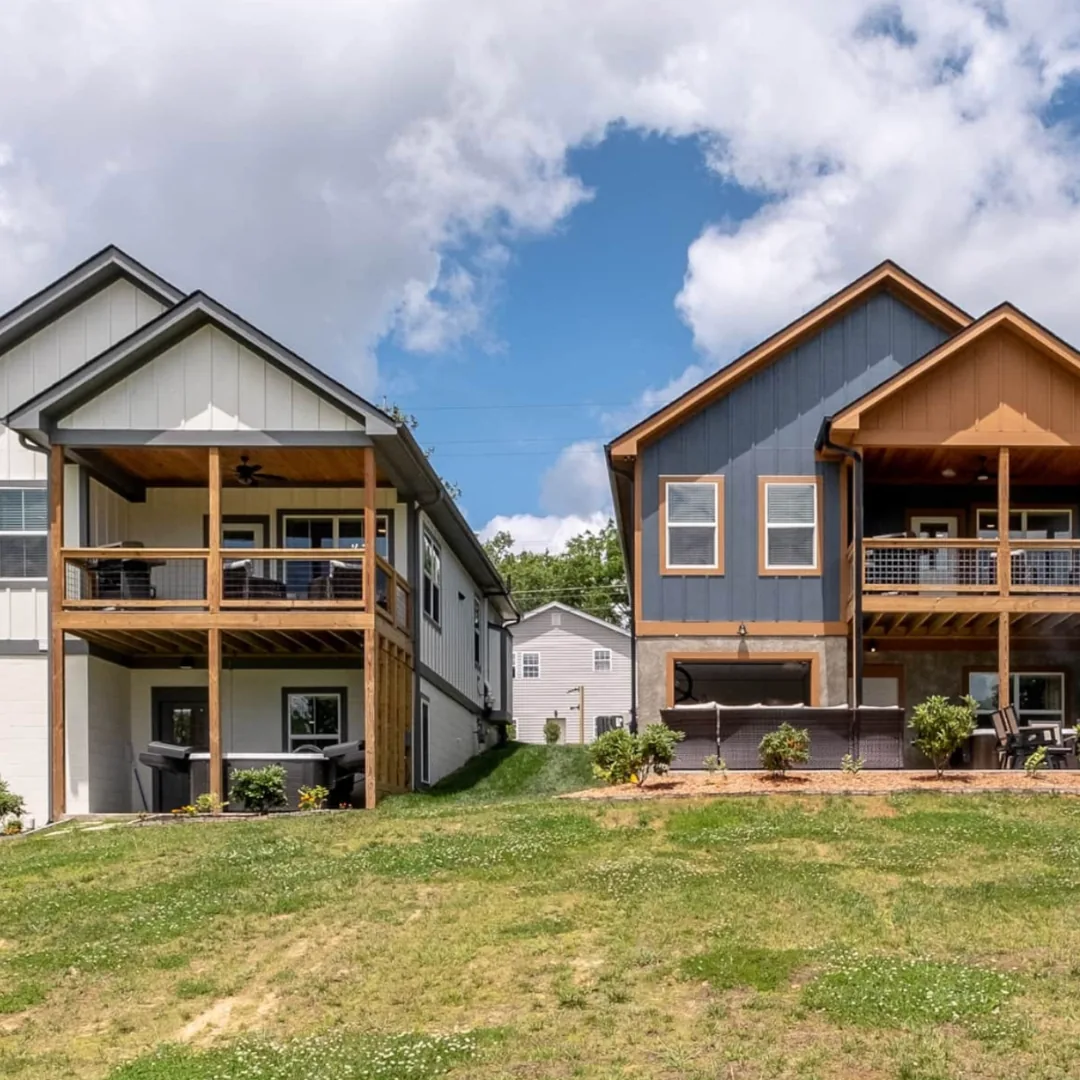
200 private acres bordering Pisgah National Forest
Valley Bear Farms is at 3,100 feet on 200 private acres bordering Pisgah National Forest, which places it squarely in the middle of the color gradient. The practical effect is that the season lasts about a month from one base.
Beech Gap and Devil's Courthouse are 20 minutes up NC-215 and peak in the first week of October. Black Balsam is 30 minutes and turns in late September. Downtown Brevard is 35 minutes down and holds color into early November. Cathedral Falls and French Broad Falls are five minutes away at valley elevation, so they turn at the end of the season alongside town. The property itself peaks in mid to late October, at roughly the same time as the Looking Glass Rock summit, and six miles of private trails means you can walk in it without driving anywhere.
If you would rather be in town, Valley Bear Farms operates two houses in Brevard itself, with full access to everything on the main property. Those put you at 2,200 feet, in the last week of the season, and within walking distance of Main Street.
Book the Brevard Homes →Where to Stay
Seven accommodation types across the property, all sharing the same amenities: 6 miles of on-property trails, a natural spring-fed cold plunge pond, a wood-fired sauna, disc golf, pickleball, bocce ball, and a bathhouse with hot showers that feel incredible after a cool fall day outside.
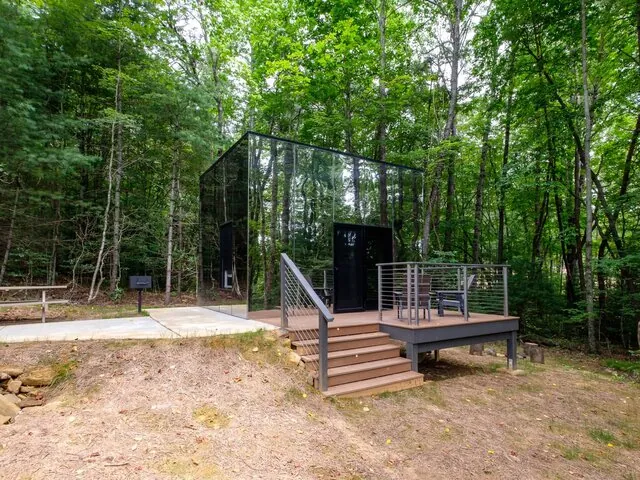
The most distinctive. Mirrored exterior walls reflect the surrounding forest so thoroughly that the cabin becomes nearly invisible, which is a striking thing in fall color. Inside: a king bed, wood finishes, a coffee station, mini fridge, and a private charcoal grill on the porch. Access to the shared bathhouse.
View & Book →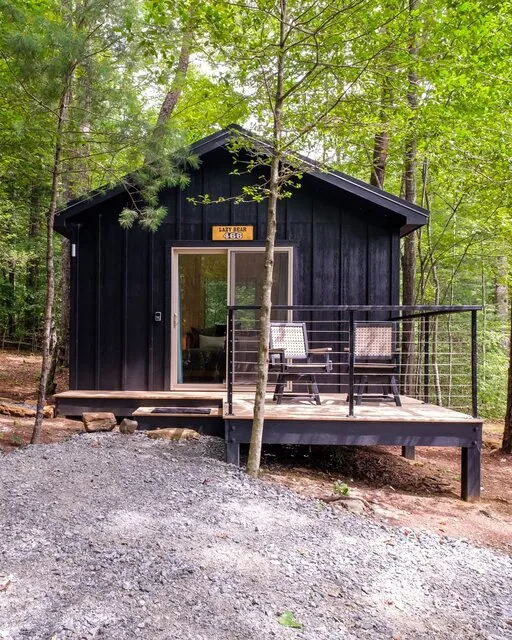
A single cabin set high in the forest canopy. King bed, firepit with firewood included, in-room coffee station, contactless check-in. Pet-friendly. Access to the shared bathhouse.
View & Book →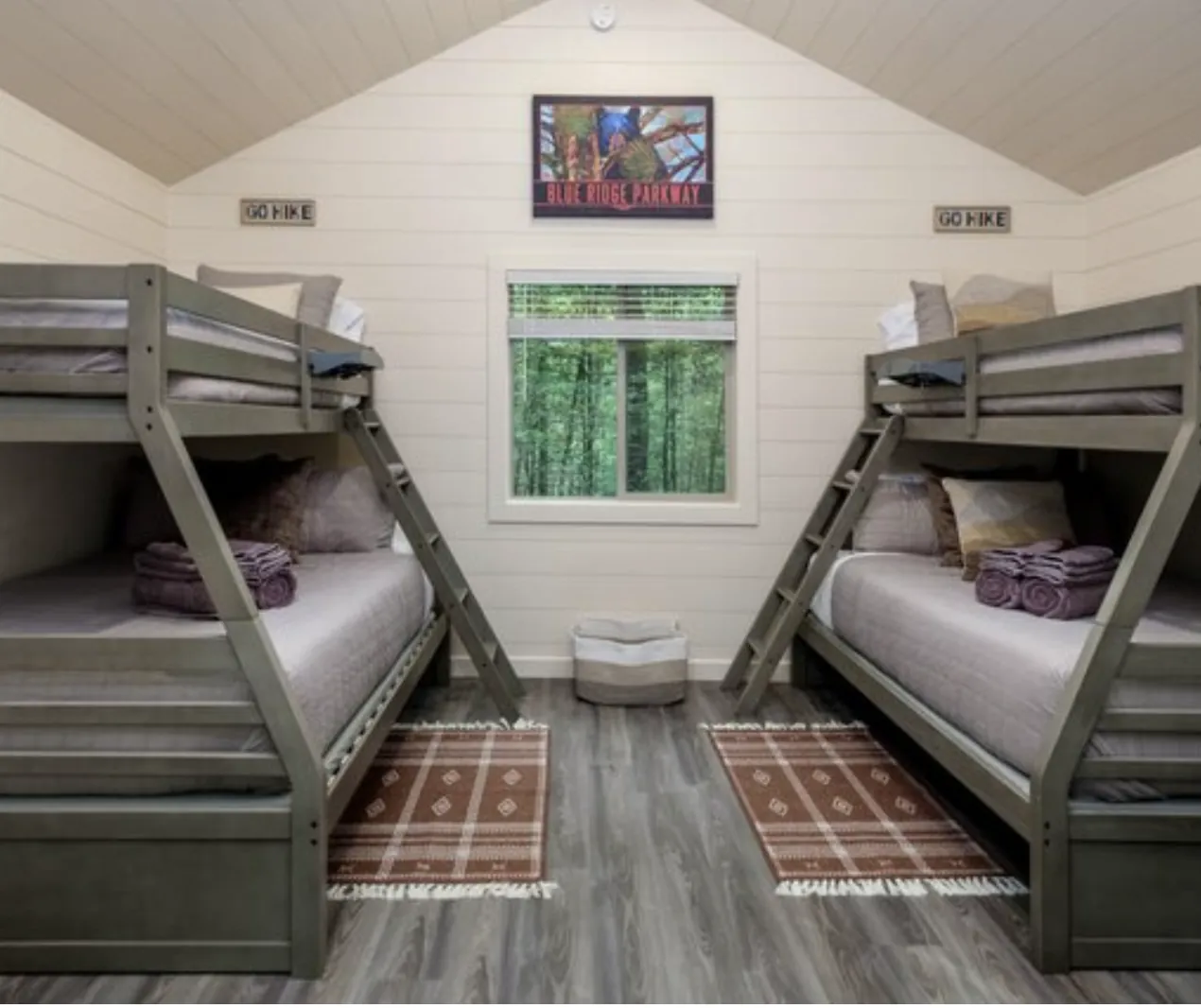
Two twin-over-full bunk beds, private firepit, charcoal grill. Pet-friendly. This cabin exists specifically because families need something that isn't a tiny room with two queen beds. The bunk setup works for kids and adults who don't mind close proximity.
View & Book →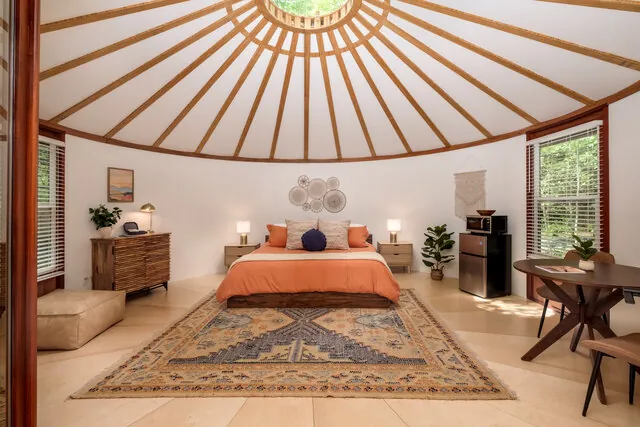
Hard-walled, fully insulated yurts positioned right beside a creek. You wake up to the sound of water. King bed, private deck, heating and air conditioning, coffee station, mini fridge, charcoal grill. Pet-friendly. A middle ground between glamping and actual seclusion.
View & Book →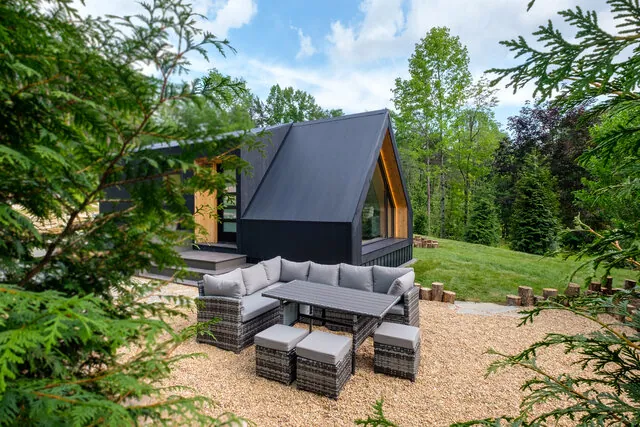
Modern A-frames with high ceilings, large windows framing the fall color, a kitchenette with a two-burner electric cooktop, and a private bathroom with a soaking tub. A king bed and king pull-out sofa sleep up to four. Dog-friendly.
View & Book →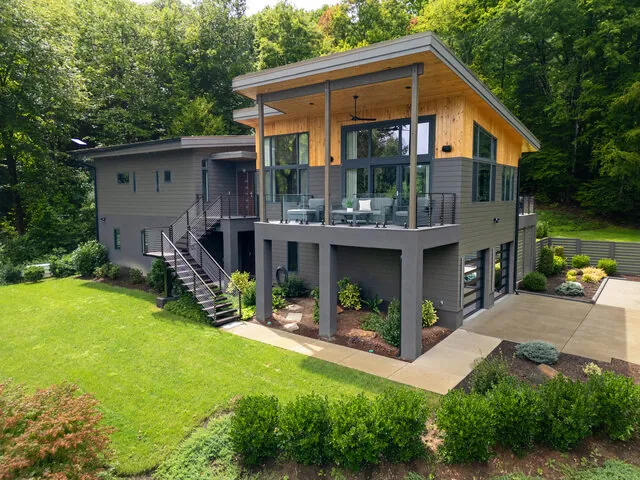
A three-bedroom modern lodge high on the property with panoramic views of the Pisgah wilderness, which is the view to have in October. Chef's kitchen, private hot tub, indoor and outdoor gas fireplaces, three decks, EV charger, one king and two queen bedrooms, two full baths plus a powder room. The group property, sleeps up to 6. Not pet-friendly.
View & Book →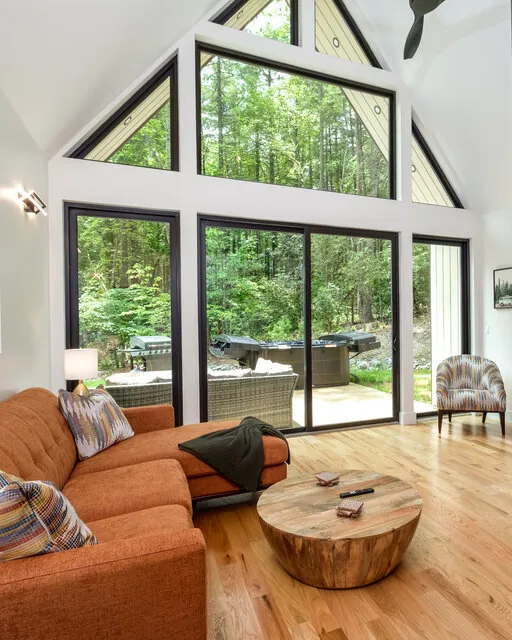
A three-bedroom home tucked into a quieter section of the property, built for families, friends, or couples who want more space without sacrificing privacy. The primary suite has a king bed and private bath, the second bedroom has a bunk setup for kids, and the third is a lofted room with its own lounge area. A glass wall in the main living area opens onto a private back porch with a gas grill, patio, and hot tub. Pet-friendly.
View & Book →October books out fast. Reserve your foliage dates direct for the best rate.
Peak fall color in Brevard, North Carolina falls in late October at valley elevations, but the timing depends on where you are standing. Color arrives roughly one week earlier for every 1,000 feet of elevation gain, so the high peaks along the Blue Ridge Parkway above 5,500 feet turn in late September and early October, mid elevations around 3,500 feet peak in mid-October, and downtown Brevard at 2,200 feet finishes the season in late October into early November.
The fall color season in Transylvania County lasts about six weeks, running from late September at the highest peaks to early November in the valleys. Peak at any single location lasts about one week, which is why the elevation you visit matters as much as the date you arrive.
The best fall color near Brevard depends on the week. Late September and early October favor the high Blue Ridge Parkway, including Black Balsam Knob, Devil's Courthouse, and Graveyard Fields. Mid-October favors mid-elevation hikes such as Looking Glass Rock and John Rock. Late October favors the waterfalls, including Looking Glass Falls, Moore Cove Falls, and the Little River corridor in DuPont State Recreational Forest. Early November favors downtown Brevard.
The Forest Heritage National Scenic Byway is the best fall drive near Brevard. The loop runs north from town on US-276, joins the Blue Ridge Parkway, and returns on NC-215, climbing from 2,200 feet to 5,720 feet and back. Because it covers that entire elevation range, some stretch of the loop is at peak color in any week between late September and early November.
Elevation is the main factor determining when fall color arrives in North Carolina. Appalachian State University's biology department, which maintains the state's most widely used fall color map, estimates that peak color occurs about one week earlier for every 1,000 feet of elevation gain. Latitude matters as well, with each degree north roughly equivalent to gaining 656 feet, which is why the same elevation near Boone turns earlier than it does near Brevard.
The waterfalls near Brevard reach peak color at the end of the season, in late October into early November. Looking Glass Falls at 2,350 feet, Moore Cove Falls at 2,620 feet, Sliding Rock at 2,700 feet, and the Little River waterfalls in DuPont between 2,220 and 2,400 feet all lie at low elevation, so they turn well after the high country. Hooker Falls at 2,220 feet is the last of them.
Book Direct · Best Rate Guaranteed
The high balds in late September, the Parkway overlooks in early October, the waterfalls and downtown in November. Brevard's color season runs about six weeks, and where you stay decides how much of it you catch. Valley Bear Farms sits at 3,100 feet, right in the middle of the gradient, on 200 private acres bordering Pisgah, with six miles of trails that peak in mid to late October and the high country and the town both a short drive away.
Planning the rest of the trip? See our guide to things to do in Brevard and where to eat in town. When you're ready, pick your dates before October fills.
Book Your Stay at Valley Bear Farms